
Tourmaline Buying Guide for Collectors
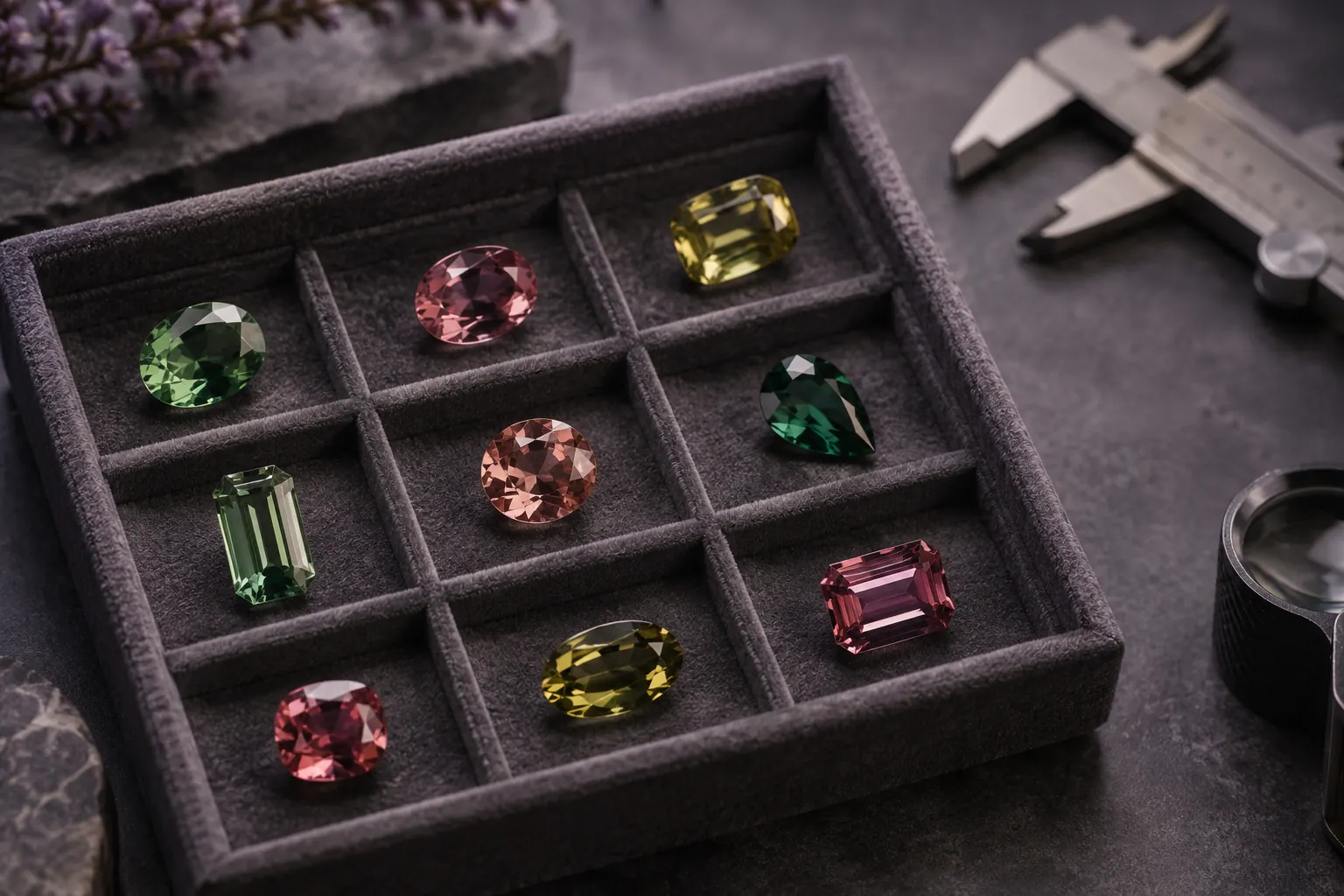
Tourmaline offers a broad starting point for a collection. The breadth of the category makes a precise brief useful: which appearance interests you, what is documented and what would make an individual stone suitable for your objectives?
A broad spectrum of color
GIA describes tourmaline as having an unusually broad color range. Its overview discusses different causes of color, including iron-related green and blue and manganese-related pink and red, and notes that some colors can be influenced by natural or laboratory-induced radiation. A broad color label does not describe every aspect of an individual specimen. GIA’s tourmaline overview provides the general background.
Consider the individual variety and stone
GIA’s overview notes that quality considerations vary across tourmaline varieties. It highlights color, clarity, cut and size, while noting that the effect of size on value differs with the variety. Use the category as a starting point for questions about a specific stone, rather than as a universal quality or price formula. See GIA’s quality overview.
For a focused discussion, describe the appearance you are drawn to and the purpose of the selection. A stone for a jewelry project raises different practical questions from a stone intended to remain loose in a collection. Neither purpose can be resolved by a variety name alone.
Trade names and documentation
Ask how the proposed material is described and what evidence supports that description. Where a trade name, origin statement or treatment assertion is used, request the information relevant to that particular statement. Keep an attractive description separate from a documented conclusion.
Paraíba tourmaline deserves its own identity-and-origin discussion. If that is your area of interest, continue with our Paraíba tourmaline guide rather than assume that every blue tourmaline falls within the same description.
Questions for a tourmaline brief
- What specific appearance, variety description and intended use interest you?
- What documentation supports the identity of the material?
- What has been disclosed about treatment or condition?
- Which origin or rarity statements are supported, and which need further assessment?
- How will the stone be held, documented and potentially transferred in the future?
Use these questions to organize the discussion before comparing offers. A size, a photograph or a memorable name should not replace the brief. If important information is missing, make the next step an evidence question rather than fill the gap with an assumption.
A longer view of ownership
A collector considering a stone within a wider wealth picture should separate three different questions: why the stone is personally appealing, what information supports the selection and what practical limitations accompany ownership. A satisfying answer to the first does not automatically answer the other two.
For generational ownership, consider the record that will accompany the collection. Keep the relevant documentation, descriptions and purchase records together, and distinguish assessed information from an assertion that remains unconfirmed. A future owner should be able to understand both the material and the limits of the available evidence.
For portfolio diversification, examine suitability rather than assume a benefit from the category name. A stone is an individual holding; an asking price is not an offer to buy it back. Consider the proposed holding period, possible ownership costs, and what would happen if you needed to sell sooner than expected.
Stone values can fluctuate. Resale is not guaranteed. This guide presents general information and questions for a considered selection; it is not an authentication, valuation or promise of investment performance.
For a focused conversation about a particular stone or your ownership objectives, explore Colored Stone Consulting, read the separate origin questions in our Paraíba guide, or make a private enquiry. Define the scope before sharing additional material or making a commitment.
Sources and further reading
These sources support the general gemological information in this article. Their inclusion does not imply an affiliation with Gem Wealth Capital or an assessment of any stone offered to a reader.