
PRIVATE CONSULTING
Colored Stone Consulting
Color, origin and treatment questions.
Begin with the individual stone and its supporting evidence. Ruby, emerald and sapphire involve different questions about appearance, treatment and reporting; there is no single score that settles them all. Ask what a laboratory has identified, what a seller has disclosed and which claims still need independent confirmation. GIA explains its colored-stone analysis.
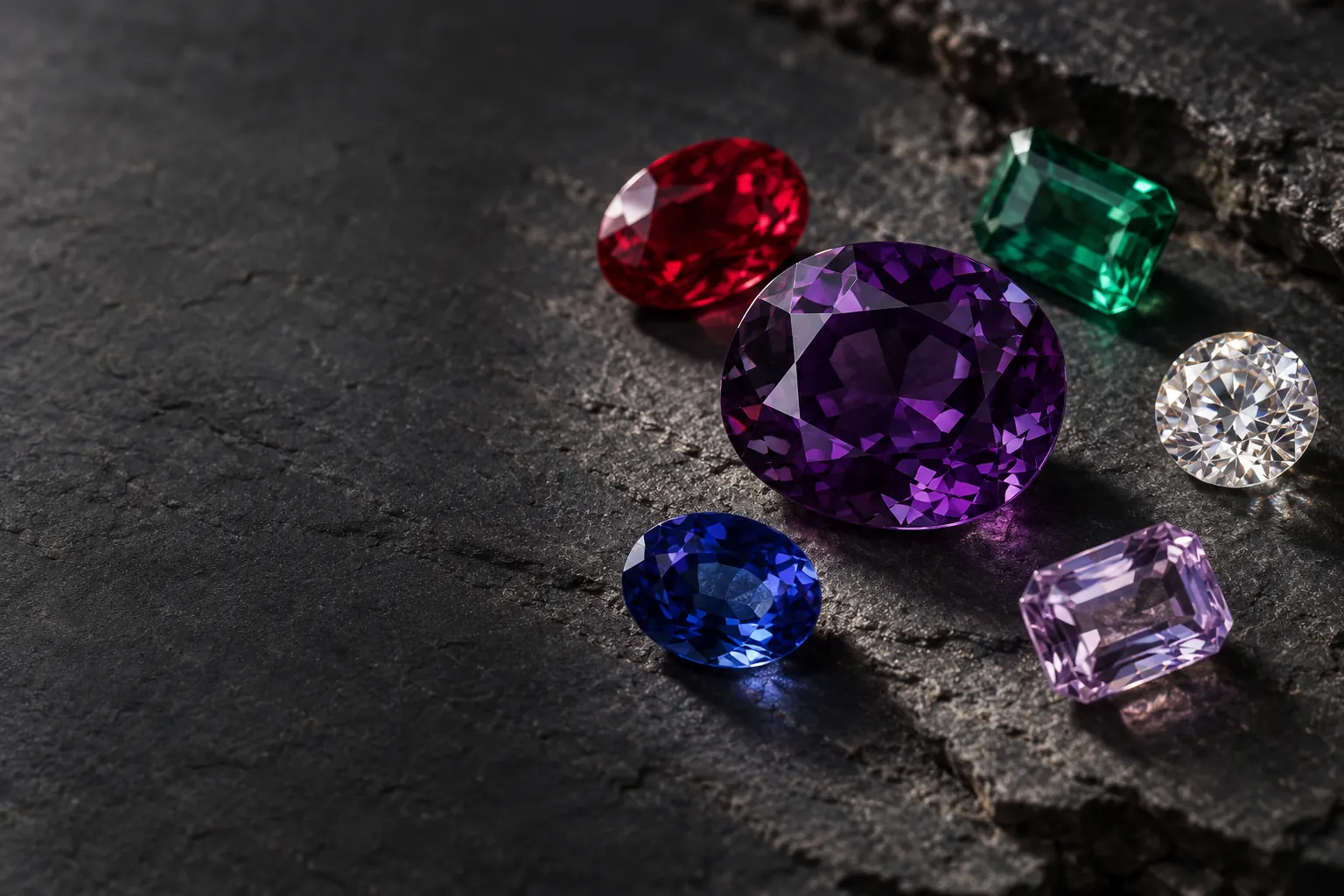
The stone-specific questions come first.
Begin with the appearance and material being considered, then review the available information about identity, origin and treatment. Claims about origin or enhancement should be examined against the documentation available for the particular stone, rather than inferred from its color or a seller’s description. For a more focused brief, explore ruby, emerald or sapphire consulting. Our collector guides to Paraíba tourmaline, alexandrite and tourmaline explain related identity and documentation questions; none assesses an individual stone.
Identity, treatment and origin questions
- What distinguishes the color and appearance of this particular stone?
- What is documented about identity, origin and treatment?
- What information is missing or requires further assessment?
- How does the stone relate to your intended collection or ownership goals?
Choose the right specialist path
Share the type of material or piece you are considering, your reason for collecting it and the decisions you want to explore. The first conversation is used to define a suitable scope and clarify what information is available. It does not confirm the quality, origin, treatment status, price or authenticity of material that has not been assessed.
Ruby: treatment and disclosure.
Compare visible color and condition with the seller’s written treatment information and the scope of any independent report. Explore ruby consulting.
Emerald: enhancement and care.
Ask how clarity enhancement is described, what is detectable and how condition may affect setting or care. Explore emerald consulting.
Sapphire: color and evidence.
Compare appearance and any enhancement or origin opinion for this stone, without treating a locality name as a quality grade. Explore sapphire consulting.
Documentation and the next generation
Keep the relevant records with the collection and separate documented information from assumptions. Where an independent laboratory assessment, valuation, tax, legal, insurance or regulated financial advice is needed, that requirement should be identified rather than presented as part of an unconfirmed service.
Beyond ruby, emerald and sapphire.
Tourmaline and alexandrite bring their own identification, treatment and viewing questions. Start with the Tourmaline, Paraíba or Alexandrite guide before defining a private brief. These guides do not assess an individual stone.
Stone values can fluctuate. Resale is not guaranteed. Precious stones may be difficult to sell and ownership costs can affect the outcome.